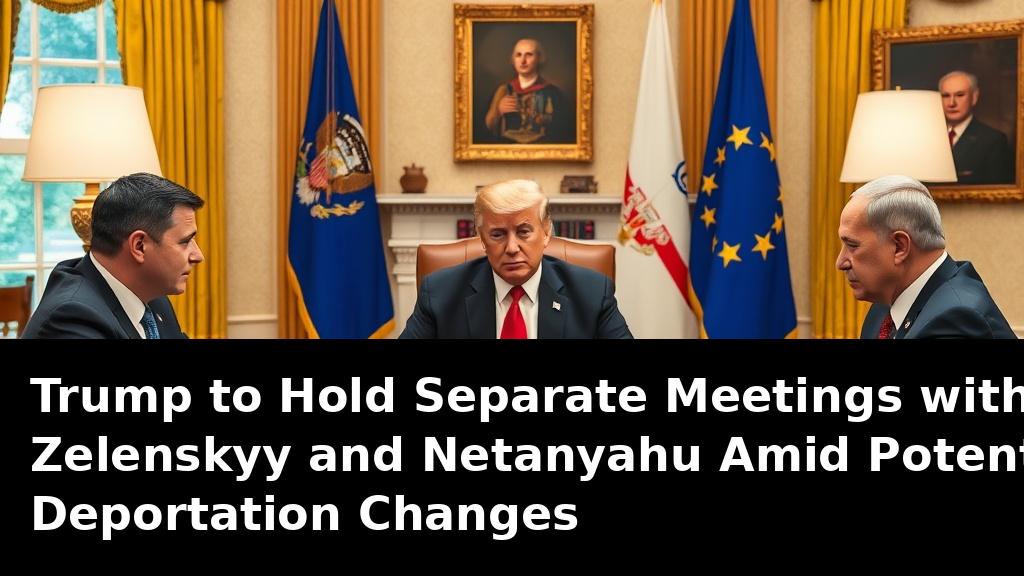
President Trump is scheduled to conduct separate meetings with Ukrainian President Volodymyr Zelenskyy and Israeli Prime Minister Benjamin Netanyahu. These discussions are expected to address ongoing international developments relevant to both nations. The meetings occur at a time when U.S. policy on immigration continues to evolve, particularly regarding holders of Temporary Protected Status.
Temporary Protected Status, commonly referred to as TPS, provides temporary relief from deportation for nationals of designated countries facing conflict or natural disasters. Recent indications suggest that certain TPS holders may encounter new deportation proceedings in the near term. This development follows broader reviews of immigration enforcement priorities under the current administration.
The diplomatic engagements highlight the administration’s focus on key foreign policy matters. Separate sessions with Zelenskyy and Netanyahu allow for targeted conversations on bilateral issues without overlapping agendas. Observers note that such structured meetings can facilitate clearer communication on matters of mutual interest, including security and economic cooperation.
One relevant context involves the historical pattern of U.S. presidential meetings with these leaders during periods of heightened global tension. Past interactions have often centered on support mechanisms and strategic alignments that extend beyond immediate headlines. This continuity in diplomatic engagement provides a framework for understanding current scheduling decisions.
Another point of analysis concerns the potential ripple effects on communities with TPS designations. Changes in status could influence workforce participation in sectors that rely on these individuals, though specific economic data remains subject to ongoing assessments by relevant agencies. Policy shifts in this area typically involve coordination between multiple government departments to ensure consistent implementation.
The overall approach reflects an emphasis on structured foreign policy alongside domestic immigration reviews. As these meetings unfold, stakeholders across various sectors will monitor outcomes for indications of future directions in both international relations and enforcement practices.